
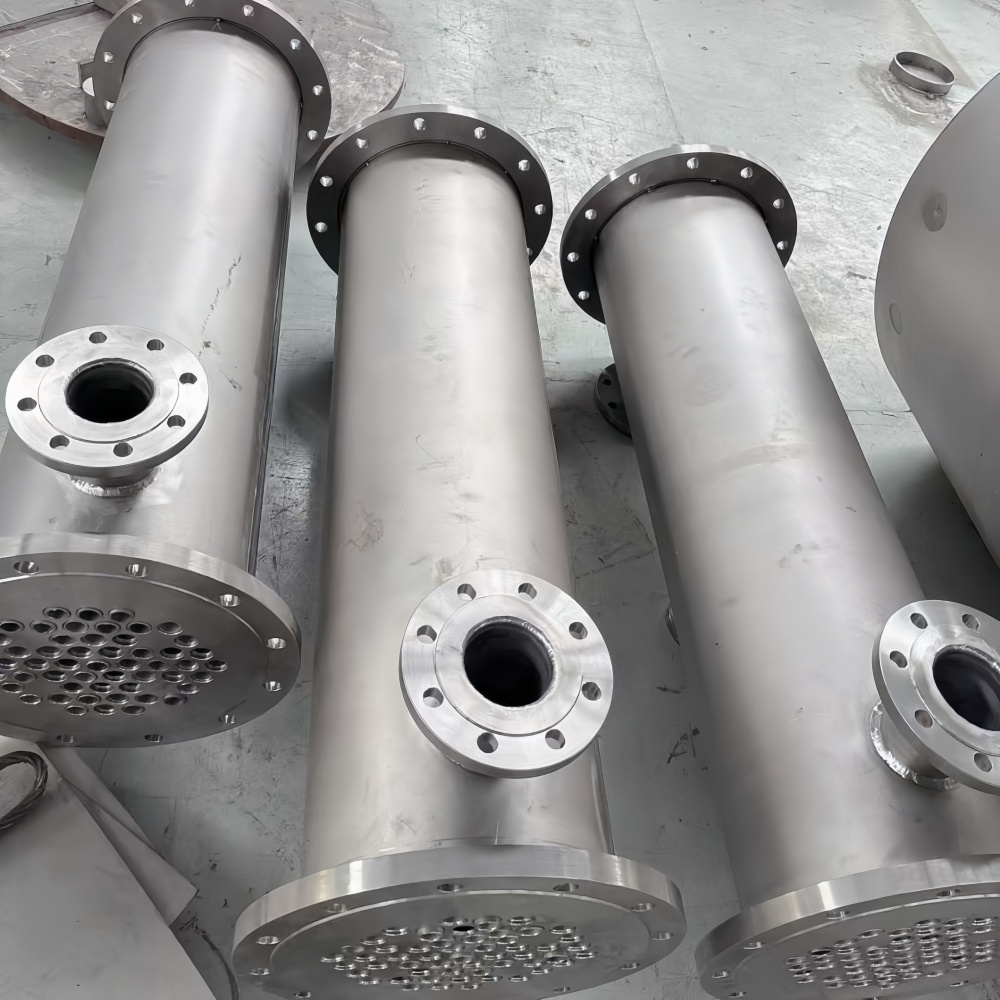
We all know titanium metal, with the chemical symbol Ti, which has excellent corrosion resistance and high strength-to-weight ratio. It is widely used in marine engineering, chemical industry, aerospace, and some special environments in pipeline systems.
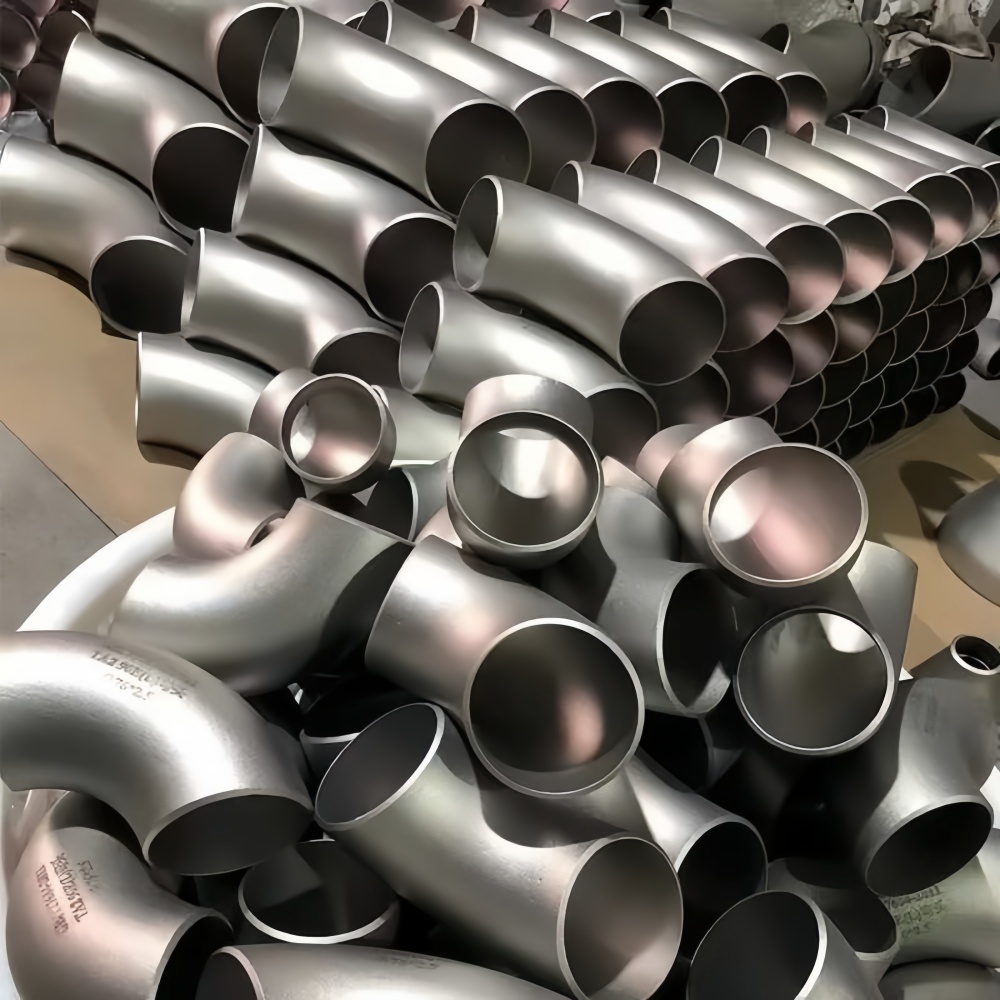
In the previous issues, we have talked about titanium material flange components, which refer to the flange connectors made of titanium alloy materials, mainly used for the connection, sealing and disassembly of pipelines. Today, we mainly discuss a relatively special type of titanium flange: the titanium tube plate flange. We often refer to it as titanium flange.
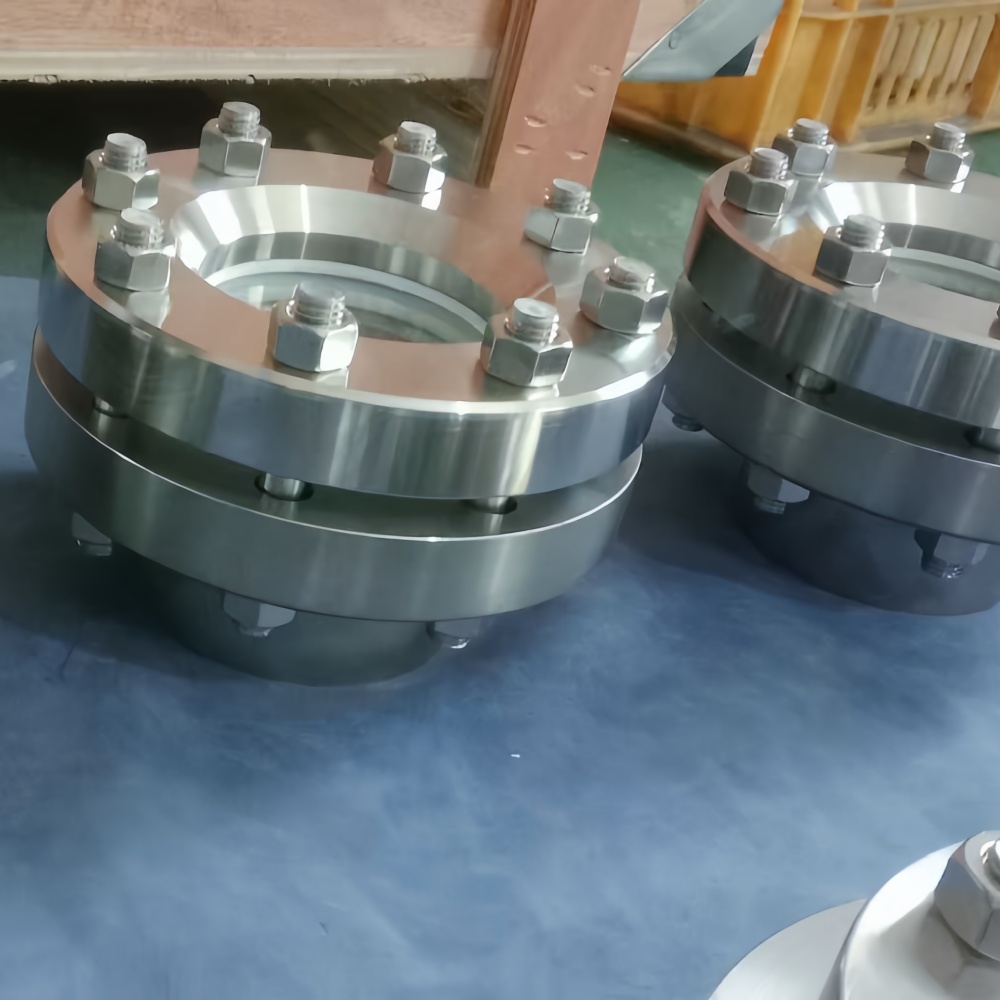
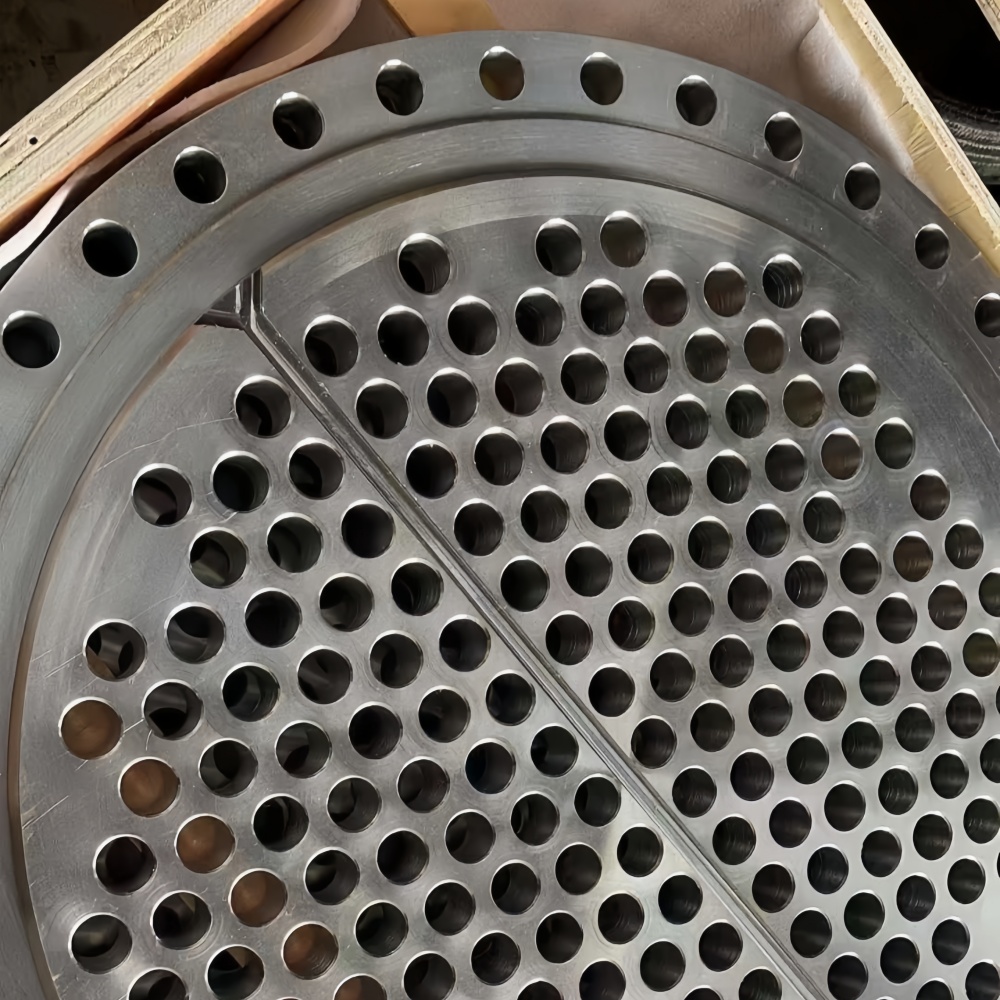
The titanium tube plate flange is a thick flat plate titanium alloy metal component, widely used in heat exchangers, boilers and pressure vessels. Its core functions include: supporting and fixing the two ends of the heat exchange tubes (tubular bundles); sealing the shell side and tube side of the equipment to prevent cross-contamination of fluids; achieving indirect heat exchange between two fluids through the tube wall while withstanding high temperature and high pressure.
The titanium tube plate flange is a simple application of titanium atmospheric pressure equipment. For example: tubular titanium heat exchanger, titanium plate-type titanium heat exchanger, titanium U-tube type titanium heat exchanger, titanium plate-type titanium heat exchanger, titanium condenser, titanium evaporator, titanium mixer, titanium tank, titanium tubular, titanium fan, titanium filter, titanium reactor, titanium storage tank, titanium equipment accessories, titanium spiral conveyor, titanium mixer, titanium U-tube, titanium plate, snake-shaped titanium plate, rectangular titanium plate, titanium mixer shaft, titanium tube plate, deep-sea detector titanium protective cover, titanium spray pipe, non-standard titanium equipment, etc.
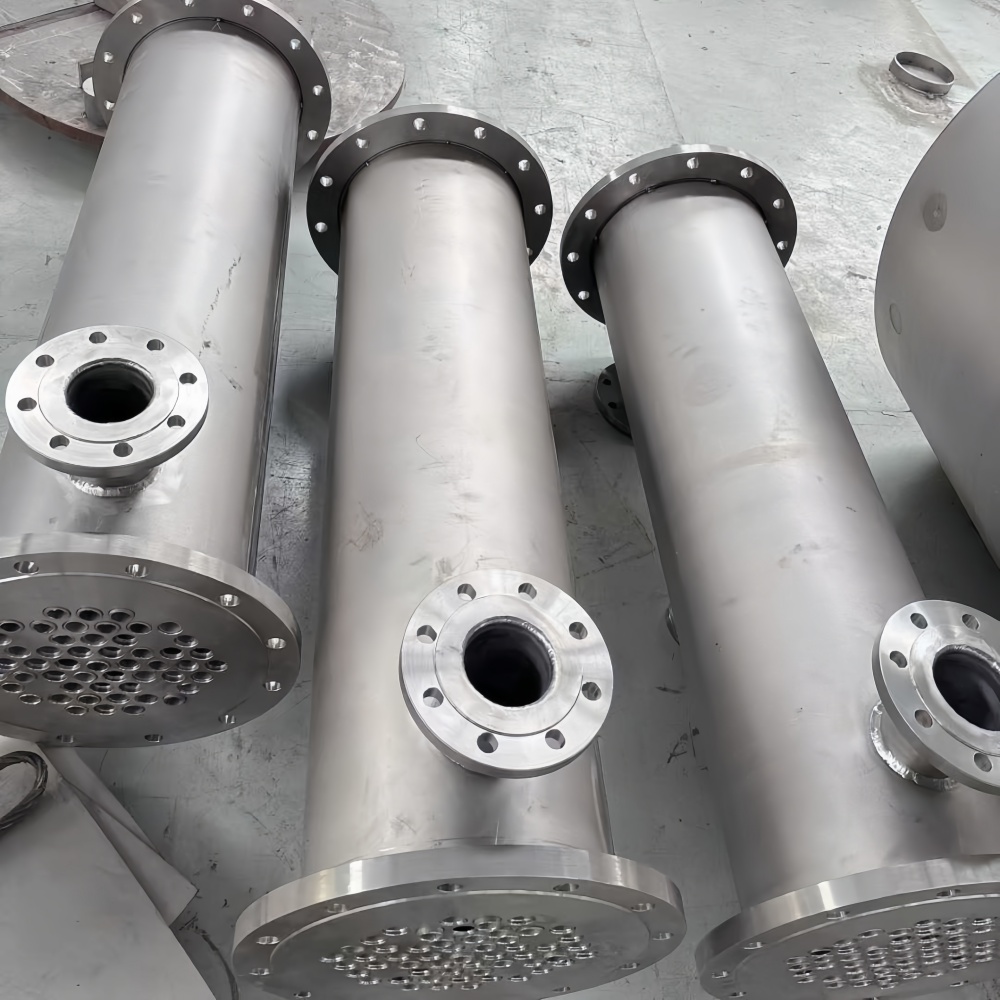
How is the titanium tube plate flange manufactured? The tube plate is usually made from a circular piece of titanium alloy material and then holes are drilled at the precise positions where the tubes are to be placed in the heat exchanger. These holes are usually designed and determined by combining the use of computer-aided design (CAD) software, and then the holes are drilled using computer numerical control (CNC) machines. Next, the tubes are fixed on the tube plate by hydraulic pressure or rolling expansion.
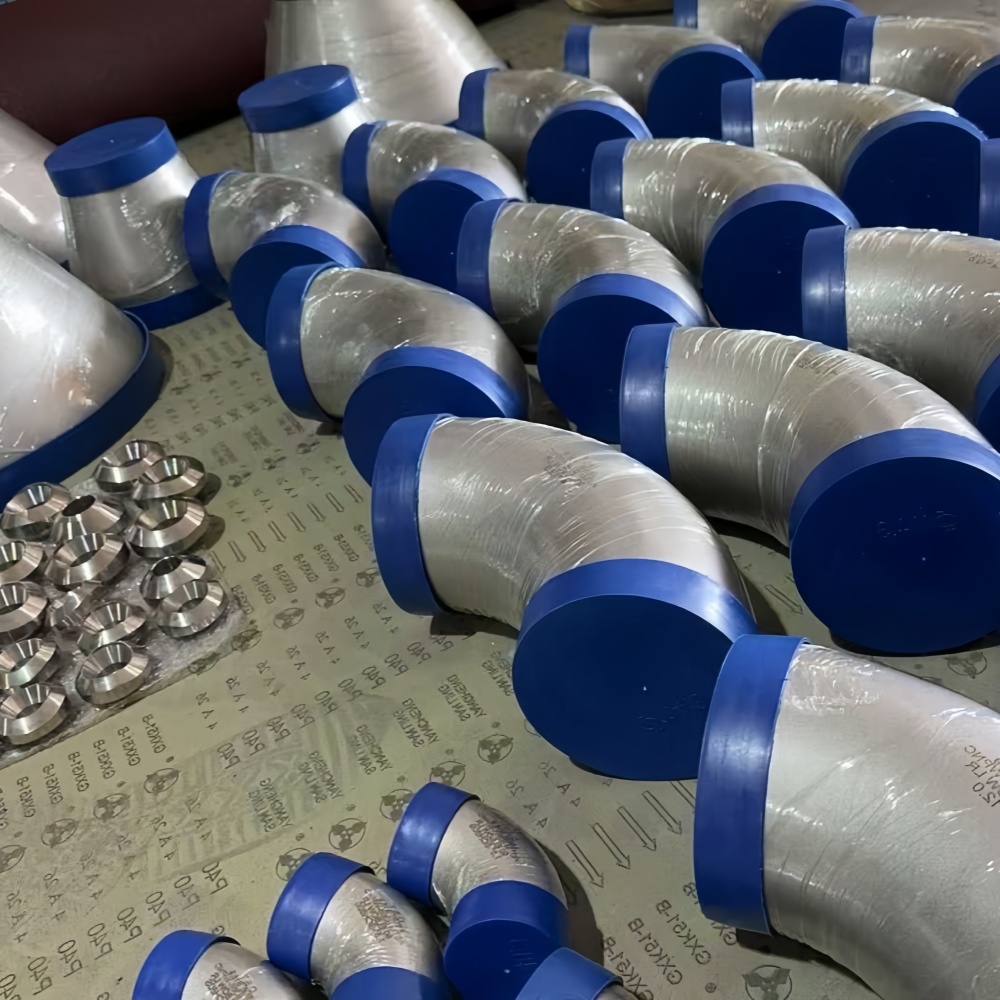
Technical requirements for titanium tube plate flange
1 Precise drilling: The tube holes need to have high dimensional accuracy (tolerance ±0.02 millimeters) to ensure the tight fit between the tube plate and the heat exchange tubes and prevent leakage.
2 Pressure resistance: A thickened design (thickness usually 20-100 millimeters, depending on the equipment size and pressure grade) is adopted, which can withstand the internal fluid pressure and avoid deformation.
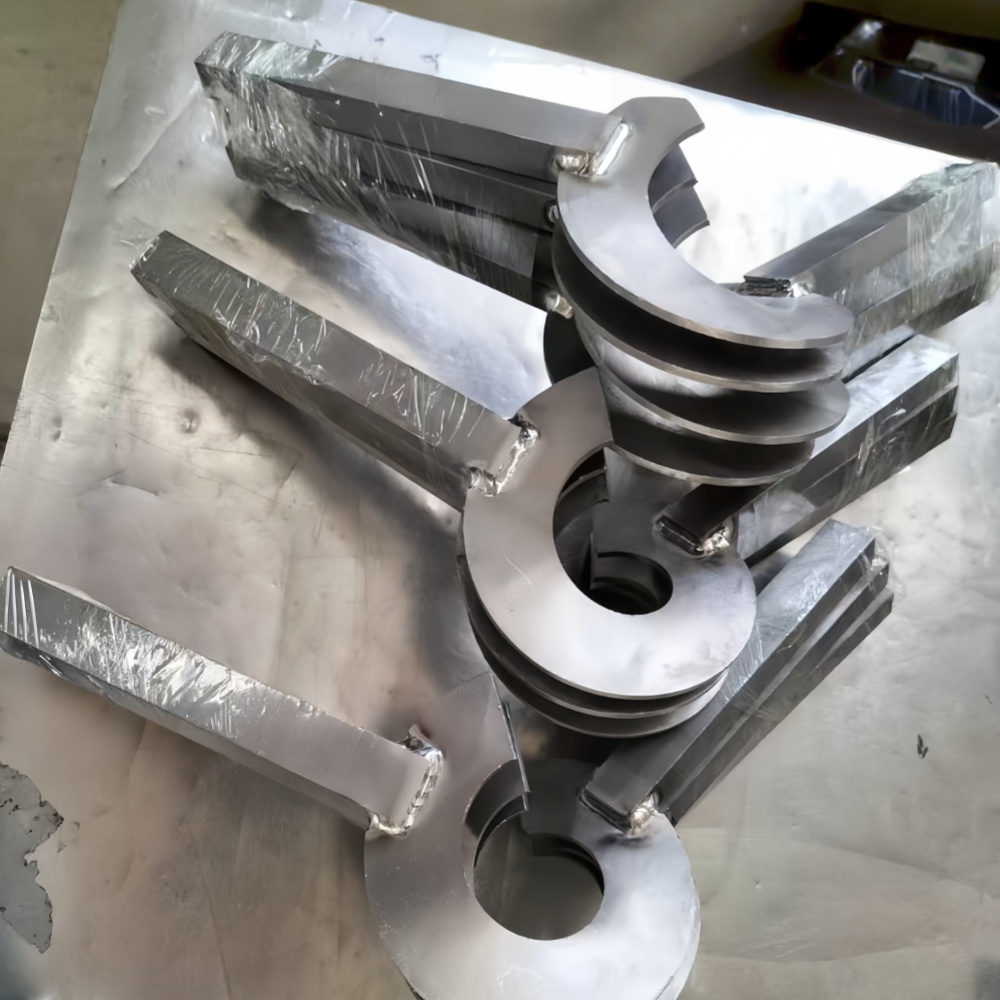
Application scenario
1 The most common application scenarios (such as shell-and-tube heat exchangers in oil refineries, and tube-sheet heat exchangers in chemical plants) - The titanium tube sheet flange separates the shell-side fluid (such as cooling water) from the tube-side fluid (such as process gas/process liquid).
2 It serves as a support for the boiler tubes in water-tube boilers and separates the combustion chamber from the water circulation system.
3 It is used as a end cover or partition in equipment handling high-pressure fluids (such as hydrogen storage containers in petrochemical plants).
 +86-0917-3217876
 18292732691
 No. 28, Middle section, Baoti Road, Weibin District, Baoji, Shaanxi
 marketing@ymdtitanium.com
 www.ymdtitanium.com


 English
 简体中文
简体中文
 18292732691
 marketing@ymdtitanium.com
 zyh2968808781
 +86 18292732691
 .cid.b0f8e930cd0ba28e
